
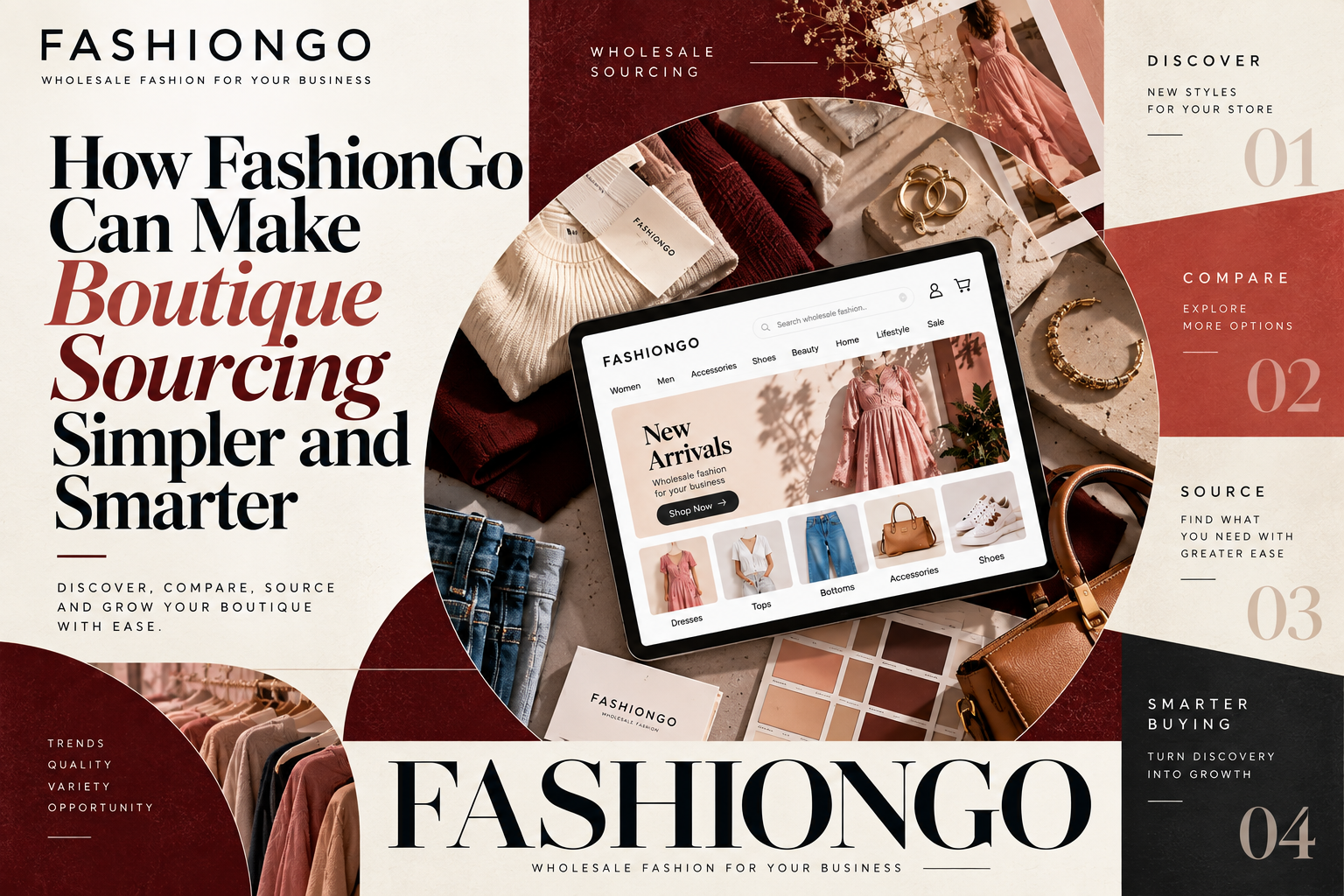
Picture two boutique owners on the same Monday morning. The first has fourteen tabs open, a phone full of unread supplier messages and a notebook she can no longer read. The second has a short list, a clear budget and a calm cup of tea. Both love fashion, and both work hard. The difference is not talent, it is how they source. Good sourcing is quiet work that decides whether a shop feels fresh or tired, profitable or stressful. A wholesale marketplace like Fashion go is built to move you closer to the second owner, and in this post we will follow a simple path: discover, compare, source and buy smarter, in plain words.
Discover: new styles for your store
Every boutique needs a steady flow of fresh ideas, because customers notice when a rail looks the same for months. Discovery is the fun part of the job, but it is easy to do badly. Scrolling without a goal leaves you tired and confused. Try giving each browsing session one small mission, such as finding three new casual tops or one statement dress for the coming season. Treat this as Unit 1 of smarter sourcing, where the aim is to see more without losing focus. When you open Fashion go with a mission in mind, the browsing feels like a treasure hunt rather than a flood. Save what excites you, and leave the rest for another day.
Compare: explore more options before you commit
The first piece you fall in love with is rarely the best one for your shop. Comparing is how you protect yourself from your own excitement. Put similar items side by side and look at them calmly: the style, the fabric details, the sizing information, the price and the vendor’s terms. Ask which one your customers would choose and why. A marketplace that gathers many vendors in one place, such as Fashion go, makes this much easier than calling suppliers one by one, because you can judge options in the same sitting. Comparison also teaches you what a fair price looks like, and that knowledge becomes a quiet advantage when you negotiate or reorder later.
Source: find what you need with greater ease
Sourcing sounds grand, but at its heart it is a simple question: where do I find the right product at the right terms? The old answers were trade shows, long phone calls and slow email chains. They still work, yet they take time that a small shop owner often does not have. Online browsing lets you search, filter and shortlist from your own desk, at your own pace. That does not mean you should skip the careful parts. Read the current order minimums, shipping terms and return rules for each vendor on Fashion go, because these can differ and can change. Ease is a gift, but only when you pair it with attention.
Smarter buying: turn discovery into growth
Buying is where good ideas either become profit or become dead stock. Smart buying means every order has a reason. Before you pay, ask three questions. Who will buy this? Where will I photograph and sell it? What will it cost me in total once shipping and other costs are added? If you can answer all three in a sentence each, the order is probably sound. Treat this as Unit 1 of healthy growth: small, planned orders that you can learn from. Then return to Fashion go, reorder what sold and drop what did not. Growth built this way is slower than a lucky guess, but it lasts far longer.
Trends: spot what is rising before it is everywhere
Trends are tricky. Follow them too late and you are selling what everyone already owns. Follow them too early and you may buy a style that never catches on. The sweet spot is watching patterns rather than single viral moments. Notice which colors, silhouettes and fabrics keep returning in your own customers’ messages, in the posts you save and in what sells fast in your shop. Then use new arrivals on Fashion go as a place to test those ideas in small quantities. A trend is only useful to a boutique when it matches your customer. If a style does not fit your people, let it pass without guilt, however popular it looks online.
Quality: judge what you cannot touch
Buying online means you cannot feel the fabric before you order, and this worries many beginners. The worry is fair, so build habits that reduce the risk. Read product descriptions closely, look at the material details and check measurements instead of trusting a size label alone. Pay attention to how a vendor presents their items, because careful listings often reflect careful work. When possible, order a small first batch from a new vendor and inspect it yourself before reordering. As you browse Fashion go, keep a simple note on each vendor: how the order arrived, how the fabric felt and how customers reacted. Over a few orders, your notes become your own trusted quality guide. Good quality control is boring, and boring is exactly what keeps your customers coming back happy and loyal.
Variety: build a collection with range
A shop with only one kind of item can feel thin, while a shop with everything feels messy. Variety, done well, sits between the two. Think in small families of products: a few easy basics, some pieces that dress things up and one or two accessories that tie an outfit together. Then check that each item can be styled with at least two others. That way customers can build full looks and are more likely to buy more than one thing. Use Fashion go to explore different categories, but keep your plan close, so that variety adds range to your brand instead of pulling it in five directions. A collection should feel like a conversation, not a shouting match.
Opportunity: where small boutiques can stand out
Large retailers win on scale, but small boutiques win on taste, speed and care. You can pick unusual combinations, respond to customers by name and change direction in a week. That is a real opportunity. Sourcing from a wide marketplace such as Fashion go lets you hunt for pieces that suit your own style rather than copying the same bestsellers everyone else stocks. Tell the story behind your picks: why you chose a color, how a piece can be worn to work and to a wedding, what it feels like to wear. Customers return to shops that help them decide, and that guidance costs nothing but your attention. Think of your boutique as a small stage where every piece has a role. Some bring customers in, some complete the outfit and some simply make the rack look alive. When you know the role of each item, you buy with purpose and display with confidence, and shoppers feel that clarity as soon as they walk in or scroll your page.
Questions to ask before every order
A short checklist can save you from most regrets. Before you confirm any order, pause and run through a few plain questions. Does this piece fit my customer’s taste and budget? Do I already own something similar that has not sold yet? Can I explain in one sentence why this item belongs in my shop? Is the delivery timing right for the season? Have I read the vendor’s current terms? Write the answers in a notebook, even if they feel obvious. When you shortlist products on Fashion go, this habit slows you down just enough to think. Most bad purchases happen in a hurry, and a thirty second pause is cheap insurance.
Present what you source so it sells
A good product can sit unsold if it is presented badly. Once your order arrives, take time to show each piece properly. Use natural light near a window, a clean background and one or two simple styling ideas, like pairing a top with jeans or adding a belt. Write captions that answer real questions: how it fits, what it feels like and where someone could wear it. Treat this as Unit 1 of your storytelling, because customers buy the picture in their head as much as the garment. While you plan your next round from Fashion go, think about which pieces will photograph beautifully, and choose with the camera in mind.
Price your pieces with a clear head
Pricing makes many beginners nervous, so they either undercharge to feel safe or overcharge to feel professional. Neither helps. Start by adding up everything a piece costs you: the wholesale price, shipping to you, packaging, fees and a share of your time. Then look at what similar shops charge and what your customers are comfortable paying. Aim for a margin that keeps the shop alive through slow months, not only the busy ones. Review your prices every season, because costs and demand shift. When you compare vendors on Fashion go, keep this sum beside you, since a cheaper item that sells slowly can earn less than a pricier one that sells fast.
Mistakes to avoid in your first three months
Almost every new seller repeats the same few mistakes, so you may as well skip them. Buying too much of one style is the first. Ignoring return and shipping rules is the second. Copying a competitor without knowing your own customer is the third. Another is skipping notes, which means you repeat the same errors without noticing. A final one is judging results too early, after a single quiet week. Be kind to yourself, and keep your orders small enough that a miss teaches you instead of hurting you. If you feel unsure while you explore Fashion go, take a break, come back with fresh eyes and trust your list over your impulses.
A simple way to use all four steps
It helps to turn the ideas above into one weekly rhythm. On the first day, discover: browse with one mission and save a short list. On the second day, compare: look at your saved items side by side and cut the list in half. On the third day, source: read vendor details carefully, ask questions and decide on a small order. After the order arrives, buy smarter next time by checking your notes on what sold. Treat this as Unit 1 of a routine you will repeat for years. When you sit down at Fashion go on your discovery day, bring your notes, your budget and your customer in mind. Routine makes the work lighter.
A word of honesty
No platform can promise sales, and wholesale always carries some risk. A style may flop, a delivery may run late and a quiet season can test your patience. That is part of retail for everyone. What protects you is a small budget for experiments, honest notes and the habit of reading terms before paying. Fashion go can help you find products, but your taste, your effort and your care for customers are what build a shop people trust. Check current details on the site yourself, since policies, minimums and product ranges can change. Be patient with the first few months, because most growth arrives quietly, one careful decision at a time.
Final thoughts
Simpler sourcing does not mean careless sourcing. It means fewer tabs, clearer questions and orders you can explain in a sentence. Discover with a mission, compare with a calm eye, source with attention to the details and buy with a reason. Do that again and again, and your boutique slowly becomes sharper and steadier. When you are ready to begin, open Fashion go, keep your notes beside you and start with a few pieces you truly believe in. If you remember only one thing from this post, let it be this: sourcing is a skill, not a lucky break. Skills improve with practice, notes and patience. Every shop you admire began with one small, thoughtful order.