You bring home a fresh pair of sneakers and they look perfect. Two weeks later there is a scuff on the toe, a gray smudge on the side and a smell you would rather not discuss. Most of us treat shoes as disposable, yet a few small habits can double the time a pair stays comfortable and clean. This guide is a plain, practical care routine for everyday sneakers, with no special tools and no fuss. We will talk about cleaning, drying, storing and knowing when to say goodbye, using Foot Locker as an example of a place where many people buy their pairs. Think of it as insurance for your feet and your wallet.
Why care is worth your time
Shoes are one of the few things you use almost every day, and they take a lot of abuse. Water, dirt, heat, friction and sweat all wear them down. A pair that is cleaned and rested properly tends to keep its shape, its grip and its comfort for longer, which lowers the real cost of each wear. Care also keeps shoes more hygienic and more pleasant to put on. None of this requires hours of work. Five minutes after wearing and a deeper clean once in a while is plenty. Whatever you buy at Foot Locker, the same basic habits apply.
Start with the care label and product notes
The most useful advice for a specific pair often comes with the pair itself. Before you clean anything, look inside the tongue or on the box for care symbols and instructions, and read the product description on the website for notes about materials. Treat this as Unit 1 of your care routine: know what your shoes are made of before you touch them with water or soap. Different materials need different treatment, and a method that is perfect for canvas can ruin suede. If you cannot find a care note, test any cleaner on a small hidden spot first. Keep the details from Foot Locker saved for later.
Know your materials
Most sneakers mix several materials. Leather and synthetic leather are smooth and wipe clean fairly easily. Suede and nubuck have a soft, velvety surface that hates water. Mesh and knit uppers are breathable but can trap dirt. Canvas is sturdy but stains easily. Rubber soles and foam midsoles handle water better but can yellow over time or crack with age. Look at your shoes and list the materials in a note on your phone. That tiny list tells you which cleaning method to use and which to avoid. When you pick a new pair on Foot Locker, check the material notes with future cleaning in mind.
The sixty second habit after every wear
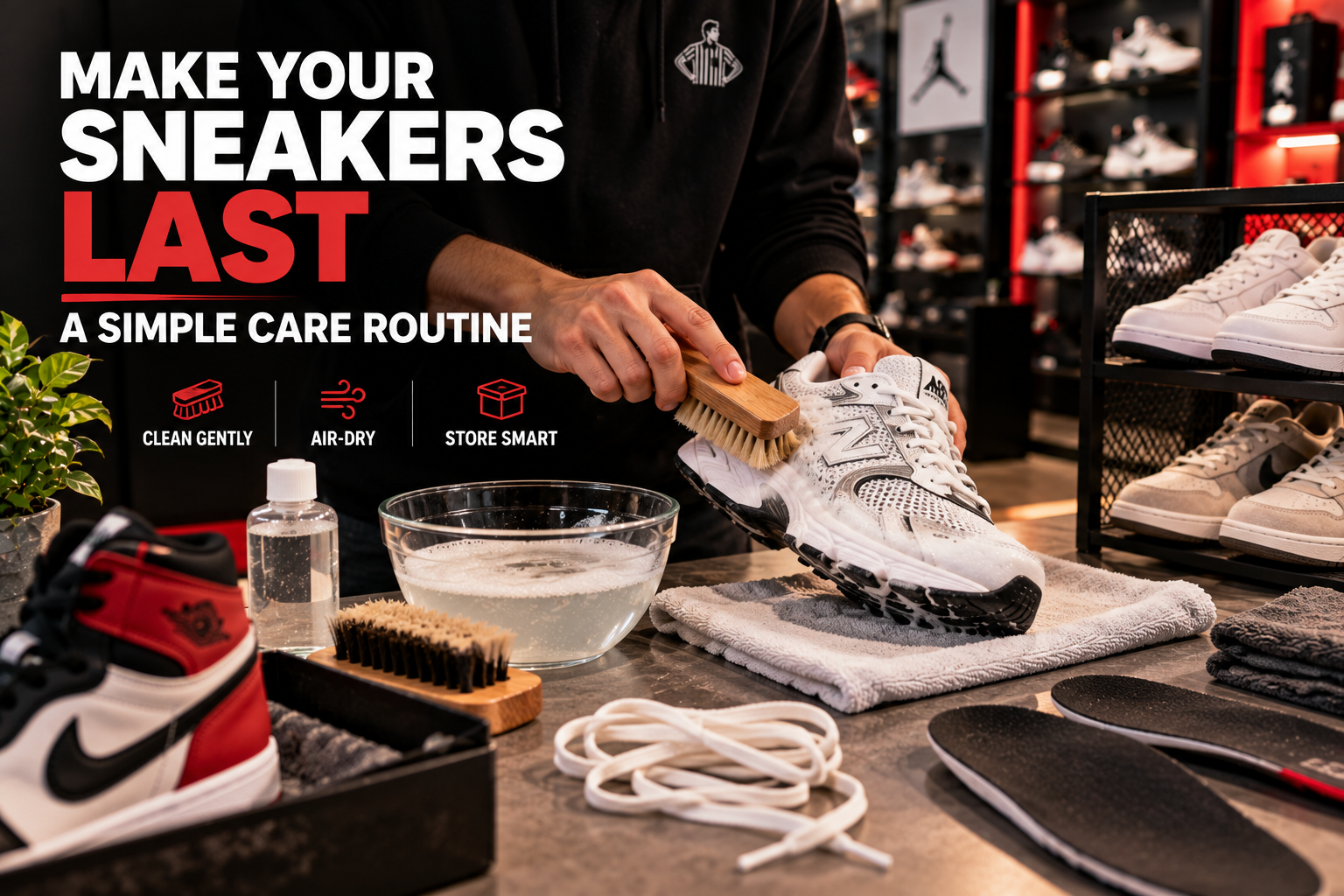
The easiest way to keep shoes clean is to deal with dirt before it sets. When you take your shoes off, knock any mud off the soles, wipe the upper with a dry or slightly damp cloth and loosen the laces so the shoe can open and air out. Take out the insoles if they are removable. Do not leave wet shoes in a bag or in the car. This takes about a minute and prevents most stains and smells. It also makes the weekly clean much easier. Try attaching the habit to something you already do, like putting your keys down, and treat each pair from Foot Locker the same way.
Cleaning smooth leather and synthetic uppers
For smooth surfaces, a soft cloth, a little mild soap and warm water are usually enough. Dampen the cloth, not the shoe, and wipe the upper in small circles. Use an old soft toothbrush for seams and edges. Rinse the cloth and wipe away soap residue, then dry the shoe with a clean towel. Avoid harsh chemicals and abrasive pads, which can scratch or dull the surface. For real leather, a small amount of conditioner now and then can keep it supple, though check what suits your particular pair. Keep any advice from Foot Locker close.
Cleaning mesh, knit and canvas
Fabric uppers hold dirt in the weave, so go gently. Brush off dry dirt first with a soft brush. Mix a few drops of mild soap into lukewarm water, dip a brush or cloth and scrub lightly in small areas. Blot with a clean cloth, and repeat if needed. Do not soak the shoe, because that can warp the shape and weaken glue. Stuff the shoe with white paper or a clean cloth to help it hold its shape as it dries. If a stain does not come out, do not scrub harder. Accept some marks as part of a lived in pair from Foot Locker.
Suede and nubuck need a different approach
These soft surfaces are lovely, and they are also the fussiest. Water can leave rings and stiffen the material, so keep them dry when you can. Use a suede brush or a clean, dry soft brush to lift dirt, brushing gently in one direction. A suede eraser can help with small marks. Treat this as Unit 1 of your suede rules: dry brushing first, water last. For stains, look for a cleaner made for suede and test it on a hidden spot. Consider a protective spray made for the material, and apply it in a ventilated area. Before buying a suede pair from Foot Locker, ask whether you are ready for the extra care.
Laces, insoles and midsoles
Small parts make a big difference. Laces can go in a small bag in the washing machine, or you can scrub them by hand with mild soap, and then air dry them. Fresh laces can change a pair’s look completely. Removable insoles can be hand washed with mild soap and left to dry fully before going back in. Wipe midsoles with a cloth and a little soap, and use a soft brush on the grooves of the outsole to remove stones and dirt that can wear the rubber. A rinse of these parts a few times a season keeps the shoe feeling fresh. Check whether the parts on your pair from Foot Locker are removable.
Drying safely
How you dry shoes matters as much as how you clean them. Never put them near a radiator, heater or in direct sunlight, because strong heat can shrink materials, crack soles and damage glue. Instead, leave them in a well ventilated spot at room temperature. Remove insoles and loosen laces to speed things up. Stuffing them with dry paper and replacing it when damp can pull moisture out from the inside. When your shoes from Foot Locker get caught in the rain, treat them gently and let air do the work.
Rotate your pairs
If you wear the same shoes every day, they never get time to dry and recover. Foam cushioning compresses and needs time to bounce back, and sweat needs time to evaporate. Having at least two pairs you alternate can extend the life of both, and it gives you variety. You do not need a huge collection. A comfortable everyday pair, plus a second pair for a different use, like workouts or rainy days, is a great start. Aim to rest each pair for a day between wears when possible. If you are planning a second purchase at Foot Locker, think about how it will share the workload with the first.
Smart storage
Where you keep shoes affects how long they last. Store them in a cool, dry place away from direct sunlight, because heat and light can fade colors and weaken materials. Treat this as Unit 1 of your storage plan: clean and dry first, store second. Keep them off the floor if possible, in a rack or a box with some airflow, and avoid stacking heavy items on top. For longer storage, stuff them with paper or use shoe trees to maintain shape. A little structure keeps your collection from Foot Locker tidy and ready.
Weather and protection
Rain, snow and mud are tough on sneakers. If you know it is going to be wet, consider wearing a pair that handles water better, such as one with a synthetic upper. Protective sprays can add water resistance for some materials, but follow the product’s directions, test on a hidden spot and reapply as needed. After wet days, wipe the shoes, remove insoles and dry them properly. In winter, salt can stain and damage materials, so rinse it off with a damp cloth. When you check pairs on Foot Locker, notice which ones are made for different conditions.
When to retire a pair
Even the best care cannot make shoes last forever. Check the outsole for worn treads, especially if you feel less grip. Look at the midsole for deep creases, cracks or flattened foam, and check the upper for tears and holes. If your feet, knees or back start to ache after wearing a pair that used to feel fine, the support may be gone. Some running guidance suggests replacing shoes after a few hundred miles of use, but this varies, so treat it as a rough guide. When it is time for new shoes from Foot Locker, you will know why.
Check the return policy before you wear them outside
Care starts before the first wear. If you are not sure a pair fits, try it indoors on a clean surface and keep the packaging, because many return policies expect shoes to be unworn or in new condition. The company says FLX members get free returns on eligible orders, but terms can differ by country and over time, so read the current rules. Once you scuff or dirty a pair, you may lose the chance to return it. Before you wear your new pair from Foot Locker outside, make sure you are happy with the fit.
Mistakes to avoid
A few errors repeat. Using hot water or strong chemicals. Putting wet shoes near a heater. Scrubbing suede with water. Wearing the same pair every day. Storing damp shoes in a closed bag. Ignoring worn soles until your feet hurt. Treat this as Unit 1 of your mistake list, and read it before you clean. Whatever pair you buy, including one from Foot Locker, a gentle routine will beat a heroic cleaning session every time.
Questions to ask yourself before you clean
What is my shoe made of? Does it have care instructions? Can the laces and insoles come out? Do I need a special cleaner? How long will it need to dry? Am I using too much water or force? Is this pair worth keeping? Write the answers on a note. If anything is unclear, ask the store or the maker. A few quick questions can protect a pair from Foot Locker from an avoidable mistake.
A word of honesty
This post is general information, not product, medical or professional repair advice. Care methods depend on materials and construction, so follow the instructions that come with your shoes and test products on a hidden spot. Details about rewards and returns come from the company’s public pages and news reports, and they change by region and date, so verify them on the official site. Foot Locker mainly serves customers in certain countries, so availability may vary. And if you decide that Foot Locker is not the right place for your next pair, that is a sensible outcome of careful comparison.
Final thoughts
A good pair of sneakers deserves a little attention. Know the materials, clean gently, dry slowly, rotate your pairs and store them well. Replace them when the support is gone, and fix small problems when it makes sense. Do this, and your shoes will look better, feel better and cost you less over time. When you are ready for a new pair, open Foot Locker, compare options with your care routine in mind and choose something you will enjoy looking after. Small habits, repeated, are what keep a favorite pair going.